Learn
Short reads about brain biomechanics, mouthguards, and what the numbers mean.
We work in a corner of research that gets confusing fast — words likekinematics, strain, and injury-risk function sit between everyday English and a textbook. These pieces are written for parents, coaches, athletes, and anyone else who wants the picture without the paper trail.
 Interpretation
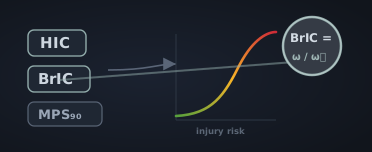
From g-force to risk: HIC, BrIC and friends
Before brain strain, engineers tried to capture injury in a single number. Here's the family of those numbers, and why the field moved past them.
 Health
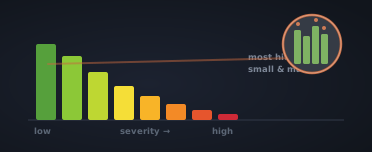
Counting the hits: exposure over a season
Most of what a head absorbs never makes the medical notes. Why the long tail of small impacts is the thing worth counting.
 Basics
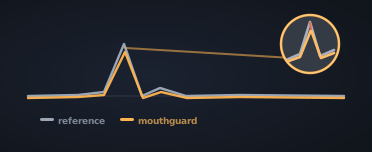
How accurate is an instrumented mouthguard?
A sensor on your teeth isn't a lab rig. Here's what the validation studies actually found — and why the brand matters.
 Biomechanics
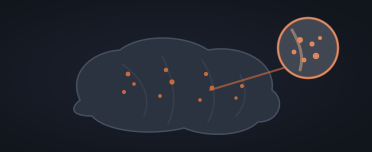
How do we simulate the brain?
An intro to the digital models that map the brain's physical response to a hit — the slow, careful simulations trace* learns to imitate.
 Health
Concussion, sub-concussive impacts, and the long view on CTE
What the science currently says about head impacts in sport, and where the open questions are.
 Biomechanics
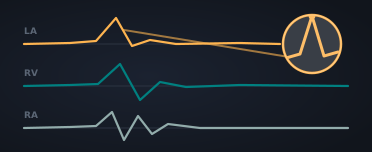
Reading the numbers — PLA, PRV, and what they actually mean
Three numbers come back from every impact. Here's what they're measuring and why two of them matter more than you'd guess.
 Interpretation
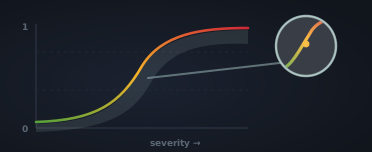
What is an injury-risk function?
How researchers go from a number on a screen to an estimate of the chance someone got hurt.
 Basics
What is an instrumented mouthguard?
The simplest way to record what your head goes through, every time it gets hit.
 Interpretation
Reading your strain by region
Once the app returns its predictions, what do you do with them?
 Biomechanics
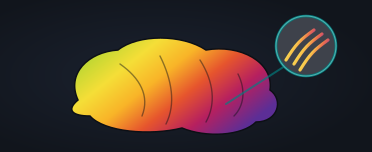
What is brain strain, and why measure it?
A short tour of the biomechanical idea that everything in the app's results table comes back to.
 Basics
Why measure brain exposure at all?
The case for treating head loading as something to be tracked, not just reacted to.
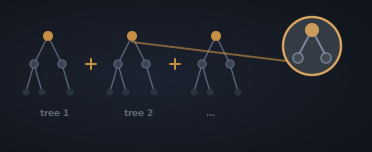 Machine learning
How trace* uses machine learning — in plain English
We didn't reinvent the brain. We taught a fast model to imitate a slow one.